


How to Paint a Pool — and Why Winter Wins
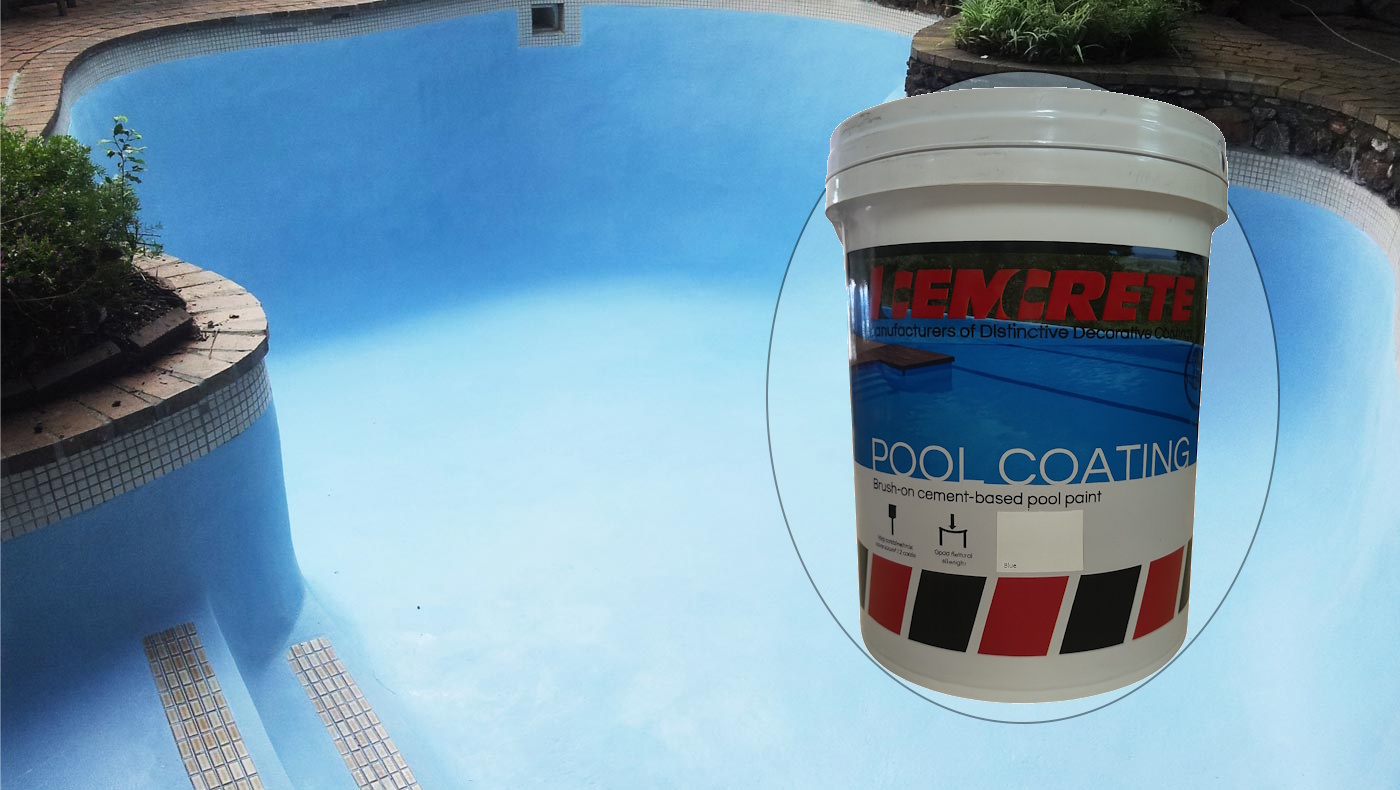
A pitted, stained pool surface doesn’t mean a costly re-plaster. With Cemcrete Pool Coating you can revitalise it yourself for a fraction of the price — and the South African winter is the perfect window to do it.
Your pool plaster doesn’t last forever. After years of chemical exposure, UV damage, and general wear, the surface becomes pitted, rough, stained, and discoloured. When that happens you have two options: a full re-plaster (which costs thousands), or painting your pool with a cement-based coating that revitalises the existing surface at a fraction of the cost.
This guide covers everything you need to know about painting a pool yourself using Cemcrete Pool Coating — from surface preparation and acid washing through to application, curing, and filling. We’ll also explain why the South African winter months are the ideal time to tackle this project.
Why Paint Your Pool in Winter?
Pool painting requires your pool to be drained and empty for at least 8 days — 2 days for preparation and application, plus 6 days of mandatory air curing before you can fill it with water. In summer, that means losing your pool during the hottest weeks of the year. In winter, it’s sitting unused anyway.
South Africa’s dry winter months offer practical advantages too. Cemcrete Pool Coating must not be applied if rain is expected within 4 hours, and any rain that falls during the 6-day curing period must be removed from the pool immediately — with an extra curing day added for each day of rain. Gauteng, Free State, North West, and Limpopo’s dry winters give you the longest uninterrupted stretch of rain-free weather for curing.
Cooler temperatures also help. In hot weather, Cemcrete recommends painting only during early morning and late afternoon to avoid the coating drying too rapidly. Winter’s moderate temperatures let you work comfortably throughout the day.
Start planning now and aim to paint in May, June, or July. By the time swimming season returns in September, your pool will look brand new.
What Is Cemcrete Pool Coating?
Cemcrete Pool Coating is a two-pack cement-based pool paint designed to revitalise old, pitted, and stained marbelite pool surfaces. Unlike conventional pool paints that sit on top of the surface, Pool Coating penetrates the pores of the old plaster and bonds chemically. This creates a sealed, durable surface that resists algae and staining.
Once mixed and applied with a standard roof paint brush, it sets rock hard and performs well permanently underwater — but it is a once-off application, not a product you re-coat every few years.
Cemcrete Pool Coating at a glance
- 15kg twin-pack (powder + liquid)
- Covers approximately 25m² with two coats
- An average 4.5m × 9m pool typically needs 3 packs
- Available in 7 colours: Abbotsford Green, Blue, Charcoal, Sandstone, Turquoise, White, and more
- Lifespan: 3–4 years with good pool maintenance, up to 7–8 years in some cases
Before You Start: What You Need to Know
Pool Coating is a once-off application
You cannot repaint over it later. The first coat penetrates and seals the plaster pores — a second coat will not bond properly and will eventually delaminate. There are no second chances, which is why surface prep and correct application matter so much.
Pool Coating is only suitable for:
- Old marble-plastered (marbelite) pools that have never been painted before
- Plaster that has cured for at least 9 months
Pool Coating cannot be used on:
- Fibreglass pools
- Previously painted pools (any paint type)
- New cement surfaces or new pool plaster
- Oil-based or plastic paint surfaces
How to Prepare Your Pool: The Acid Wash
Surface preparation is the most critical step. Poor prep is the number one reason pool coatings fail. Do not rush this stage.
-
Drain the pool completely
Empty the pool fully. Use your pool pump set to waste for most of the water, then a submersible pump or siphon for the remaining water at the bottom.
-
Treat algae (if present)
If there is algae on the plaster, dissolve 4 cups of granular chlorine (HTH) into a 10-litre bucket of water. Apply this solution to the affected areas using a block brush. Allow it to work for 15–20 minutes, then scrub and rinse thoroughly.
-
Acid wash the pool surface
This is the step that makes or breaks your paint job. The acid wash removes calcium scale, stains, and the thin deteriorated top layer of plaster — exposing a clean, open-pored surface that the coating can penetrate.
In a plastic bucket (never metal), mix 1 part hydrochloric acid to 2 parts water. Always add acid to water, never water to acid. Wear protective gloves and eyewear. Apply liberally to the old plaster with a block or stiff nylon-bristled brush, working in sections from the shallow-end walls.
While the acid is still active, wire-brush the surface firmly — you need to physically roughen the plaster to create a key for the coating. It should feel like medium-grit sandpaper when you’re done. Flush thoroughly with clean water. If there’s any doubt, do a second acid wash. This is not a step where you cut corners.
-
Repair cracks and damage
Inspect the clean surface for cracks and holes. Repair these using Cemcrete Underwater Pool Patching 1kg or 5kg. This product can even be applied underwater, but for best results during a full repaint, apply it to the dry surface and allow it to cure before coating.
-
Final clean and masking
Vacuum or sweep all dust and debris from the pool. Remove all mosaic fittings and light housings, and mask with tape. The pool shell must be completely clean, free of loose material, and damp before you begin painting.
How to Apply Cemcrete Pool Coating
Mixing
Pool Coating comes as a twin-pack — a drum containing a bag of powder and a bottle of liquid. Pour the liquid in first, then slowly add the powder while stirring with a flat paddle or mechanical mixer. Mix to a creamy, paintable consistency. Add small amounts of clean water if too stiff, but don’t over-thin.
Use all mixed material within 1 hour. If the job will take longer, split the pack and mix smaller batches. Mixed material cannot be stored.
Application
Dampen the pool surface — it should be damp but not glistening with standing water. A light mist spray is ideal.
Apply two coats liberally using a large roof paint brush. Work the brush in even strokes and finish with the tip of the brush to minimise brush marks. Use consistent directional strokes — vertical on walls, and one direction on the floor. Start from the deep end and work toward the shallow end. Allow the first coat to firm up before applying the second.
Curing and Filling Your Newly Painted Pool
The 6-day curing period
After application, the coating must air cure for 6 full days before filling. During this time:
- Remove any rainwater from the pool immediately — add an extra curing day for each day of rain
- Mist-spray the exposed coating every hour on the first day to prevent premature drying and cracking, especially in warm or windy conditions
- Keep leaves, dirt, and mud off the fresh surface to prevent staining
Filling the pool
After 6 days, begin filling from the deep end. Fill continuously in one operation — do not stop and start, as this can cause a visible waterline stain on the fresh coating.
Water chemistry after painting
Fresh cement-based coatings raise your water pH. The pH of untreated water will rise and stabilise at approximately 11, so you’ll need to manage it carefully for the first few weeks:
- Dose only with small quantities of unstabilised granular or liquid chlorine
- Avoid copper sulphate-based chemicals — they react with the fresh coating and cause permanent staining
- Check and adjust pH regularly
- Do not use your automatic pool cleaner for 21 days — manual brushing only during this period
If you’re concerned about ongoing plaster porosity or hairline cracking after painting, consider applying Cemcrete Pool Sealer 5L as an additional protective layer.
What You’ll Need: Complete Shopping List
For the coating- Cemcrete Pool Coating 15kg — Blue, Charcoal, or White
- Cemcrete Underwater Pool Patching 1kg or 5kg — for crack repair
- Hydrochloric acid (pool acid)
- Granular chlorine / HTH (for algae treatment if needed)
- Wire brush and block brush
- Paint scraper
- Large roof paint brush (and/or lambswool roller for the second coat)
- Masking tape
- Plastic buckets (not metal)
- Protective gloves and eyewear
Full application walkthrough
Cemcrete’s own video covers the complete Pool Coating process — from surface prep to the final coat. If you’d like to see the consistency and technique in action before you begin, it’s worth three minutes.
▶ Watch on YouTubeFrequently Asked Questions
Can I paint a fibreglass pool with Cemcrete Pool Coating?
No. Cemcrete Pool Coating only works on old marble-plastered (marbelite) swimming pools that have never been painted before. Fibreglass, vinyl, and previously painted surfaces are not compatible.
How long does pool paint last?
Cemcrete Pool Coating typically lasts 3 to 4 years with proper pool maintenance and balanced water chemistry. In ideal conditions with careful chemical management, it can last 7 to 8 years.
Can I repaint my pool with a second coat of Cemcrete Pool Coating?
No. Pool Coating is a once-off application. The first coat penetrates and seals the plaster pores — a second coat has no pores to key into and will eventually peel. This is why surface prep and correct application the first time are critical.
How long after painting before I can fill the pool?
The coating must air cure for 6 days before you begin filling with water. If it rains during the curing period, add an extra day for each rainy day.
When can I use my automatic pool cleaner after painting?
Wait 21 days after the pool has been filled before reintroducing an automatic cleaner. Use a manual brush and hand-held vacuum only during this initial period.
How much Cemcrete Pool Coating do I need?
One 15kg twin-pack covers approximately 25m² with two coats. An average residential pool (4.5m × 9m) needs about 3 packs. Measure your pool’s total surface area including walls and floor to calculate your requirement.
What is the best time of year to paint a pool in South Africa?
Winter (May to July) is ideal. The pool is not in use, the dry weather allows uninterrupted curing, and cooler temperatures prevent the coating from drying too quickly during application.
What colour options are available?
Cemcrete Pool Coating is available in 7 colours including Blue, Charcoal, White, Turquoise, Sandstone, and Abbotsford Green. Browse the full range on the Pool DC product page.
Shop Pool Paint at Pool DC
We stock Cemcrete Pool Coating, Pool Sealer, and Underwater Patching Compound at manufacturer-competitive prices, with nationwide delivery across South Africa. Don’t wait until September when everyone else is scrambling — get your pool sorted this winter while the weather is on your side.
Browse Pool Paint & Surface Repair →